The WDR compliance binder: what a Central Valley dairy keeps on file
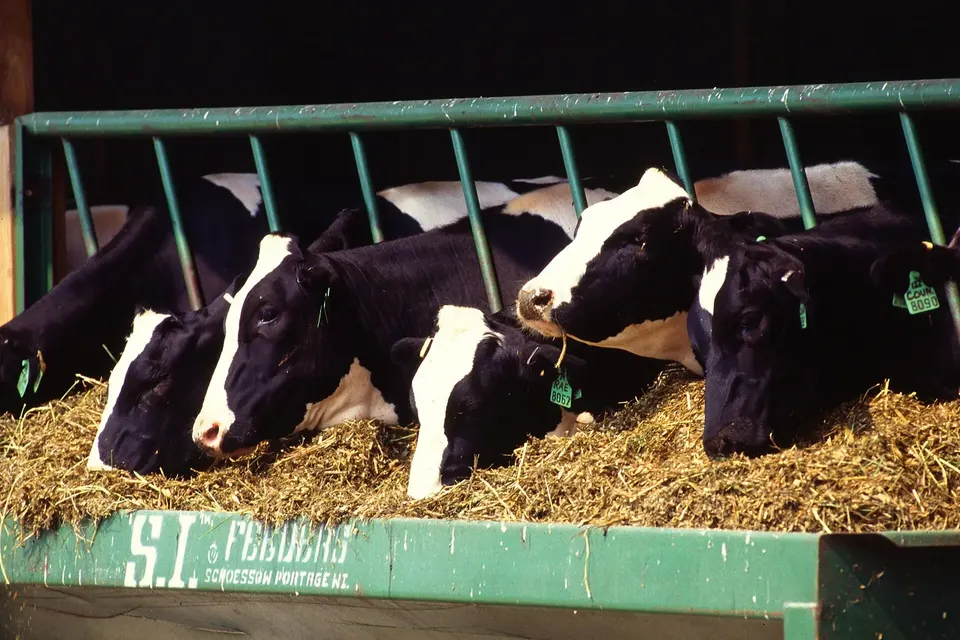
When the Central Valley Water Board first brought dairies under a General Order in 2007, extension advisers and industry groups encouraged producers to keep everything the order required in one place: a reference binder, organised by topic, that an inspector, a consultant or a new herd manager could open and follow. The name stuck. This guide walks through what such a binder holds under the current order, section by section, and why each part matters.
This is a reading guide to public requirements, not a template to file. The text of Order R5-2013-0122 and its Monitoring and Reporting Program, and any order the regional board issues later, prevail over any summary.
1. The order and its timeline
The first tab holds the order itself, its attachments and any letters from the regional board addressed to the dairy. It is worth keeping a one-page calendar alongside: the annual report is due each 1 July; inspections are weekly from 1 October to 30 April and monthly from 1 May to 30 September; sampling dates follow the crop and application cycle. Since September 2026, this tab also needs the State Water Board's Order WQ 2026-0028 and, as they arrive, the investigative orders and progress reports it calls for (see our history of the General Order).
2. Facility description and maps
A dairy's obligations depend on its layout. This section holds the description of the production area — corrals, freestalls, milk barn, feed storage, settling basins and ponds — and of every land application area, with acreage, crops and the source of irrigation water. Maps should show property lines, buildings, ponds, wells (domestic, agricultural and monitoring), tile drains, surface water bodies, field boundaries, valves and the routes by which runoff or tailwater could leave the property. Aerial imagery and free mapping tools make this easier than it was in 2007, but the map is only useful if it is kept current after every change in fields or plumbing.
3. Waste management plan
The waste management plan covers the production area. It documents that ponds have the capacity to hold manure, process wastewater and storm water through the wet season, that the production area is protected from flooding, and that the facilities are built and maintained to limit infiltration. It is prepared or reviewed by a qualified professional. When a pond is rebuilt or a corral is regraded, this tab needs the revised drawings and calculations.
4. Nutrient management plan
The nutrient management plan, certified by a specialist, governs land application. For each field it sets the expected crop and yield, the nitrogen the crop will remove, and the planned applications of manure, wastewater, commercial fertiliser and nitrogen in irrigation water. Under the 2013 order the benchmark is an application-to-removal ratio of 1.4 for total nitrogen. Exports of manure to other farms are recorded with weights and moisture content. Our article on nitrogen transformations in soil explains why the plan counts nitrogen the way it does.
5. Sampling protocols and results
The monitoring programme specifies what is sampled, how often and for which analyses:
- Manure and process wastewater — nutrient content, so that applications can be calculated in pounds of nitrogen rather than gallons or loads.
- Soil — at depth, for nitrate-nitrogen and other constituents, on a set schedule.
- Irrigation water — for its nitrogen contribution and salinity.
- Plant tissue — at harvest, for total nitrogen, phosphorus, potassium, ash and moisture, with the weight removed from each field (see forage and plant tissue sampling).
- Supply wells and tile drains — annually for nitrate-nitrogen with field readings of conductivity and ammonium, and every five years for general minerals (see drinking water from farm wells).
Keeping the written protocol for each sample type next to the laboratory results helps show that samples were taken the same way each time, which is what lets one year's numbers be read against the next. Chain-of-custody forms belong here too.
6. Inspection records
Inspection logs show that someone looked, on schedule, and wrote down what they saw: freeboard in each pond, the condition of berms, any seepage or erosion, conditions in the fields before and during wastewater applications. The monthly pond photographs with the depth marker go here. Records are kept on site for five years. Our guide to production area visual inspections covers the schedule in detail.
7. Application and export records
For every application of manure or process wastewater, the record shows the date, field, quantity and nutrient content; for every export, the recipient, quantity and moisture. These records are what the annual report is built from, and the most common reason a report takes longer than expected is a gap here.
8. Discharges and priority reporting
If a discharge reaches surface water, the order requires monitoring of the discharge and of the receiving water, and some events must be reported within 24 hours with a written report within two weeks. This tab holds the reporting procedure, the forms and copies of anything reported. See discharge monitoring and priority reporting.
9. Annual reports
Copies of each year's annual report and its attachments — the summary of applications and harvests, sampling results, the groundwater section or the representative programme's report, and the storm water section — show the dairy's history at a glance. Dairies in the representative monitoring programme have their groundwater information reported through it.
10. Emergency information
The last tab is the one most likely to be needed in a hurry: whom to call for a pond failure, a spill, a power outage or a flood, and where the shut-off valves are. Our emergency planning guide suggests what to include.
Paper or digital
Nothing in the order requires paper. Many dairies now keep records in spreadsheets or farm-management software, and consultants usually prepare annual reports from those files. What matters is that the records are complete, dated, retrievable on site and backed up. A printed copy of the emergency tab, in the office and in the milk barn, remains a good idea.
Sources
- Central Valley Regional Water Quality Control Board, Order R5-2013-0122 and its Monitoring and Reporting Program (inspections, nutrient monitoring, groundwater monitoring, reporting).
- State Water Resources Control Board, Order WQ 2026-0028, 15 September 2026.
- Central Valley Water Board, Dairy program regulations and requirements.
 Water & nutrients
The dairy General Order, 2007–2026
The 2007 order, the 2013 reissue and the State Water Board's 2026 nitrogen framework, in plain terms.
 Water & nutrients
Production area visual inspections
Weekly in the wet season, monthly in the dry: what to look at around ponds, corrals and fields, and how to record it.