The Central Valley dairy General Order, from 2007 to the 2026 remand
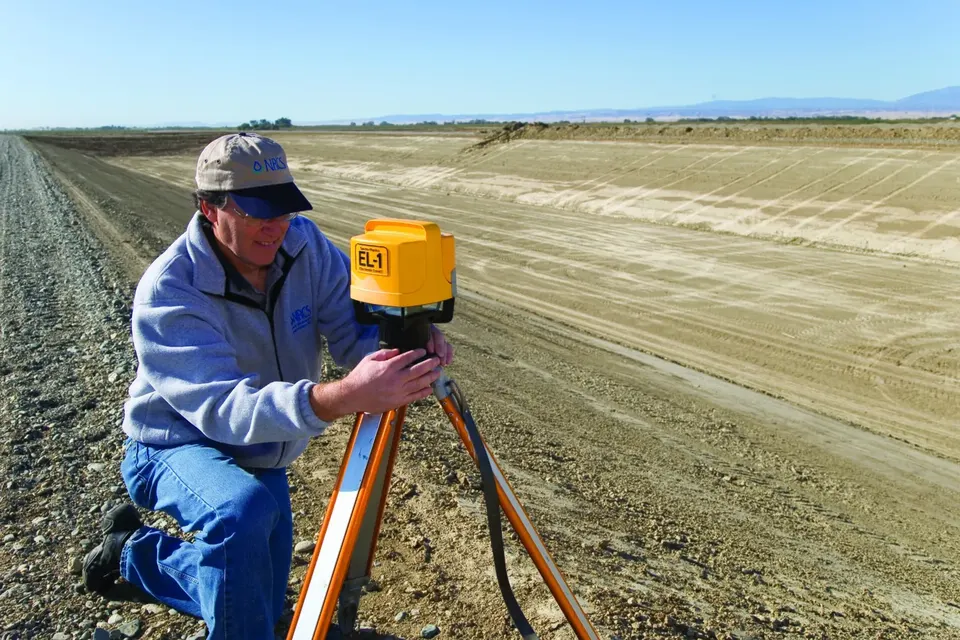
For almost twenty years, the dairies of California's Central Valley have operated under a single "General Order": a set of waste discharge requirements that every existing milk cow dairy in the region is enrolled in. It has been rewritten once, in 2013, and in September 2026 the State Water Board sent it back to the regional board with instructions to rebuild its nitrogen rules. This article traces those three moments and what each one asks of a dairy.
Why a water permit for dairies
Under California's Porter-Cologne Water Quality Control Act, anyone who discharges waste that could affect the quality of the state's waters needs waste discharge requirements, usually called WDRs, from a Regional Water Quality Control Board. Dairy manure is a valuable fertiliser, but it is also, in the legal sense, a waste. The State Water Board's own figures give the scale: a dairy cow produces roughly 120 pounds of solid manure and 36 pounds of liquid manure a day, and a herd of 1,000 cows generates on the order of 365,000 pounds of nitrogen and 470,000 pounds of salts a year. Most of that ends up in storage ponds and then on the fields that grow the herd's feed.
In the Central Valley, those fields sit on top of the groundwater that many towns and most farmhouses drink. Nitrate that moves below the root zone can reach the aquifer, and once there it stays for decades. That is the core reason the region's dairy rules focus on groundwater rather than only on runoff into streams.
2007: the first General Order
On 3 May 2007 the Central Valley Regional Water Quality Control Board adopted Order R5-2007-0035, waste discharge requirements for existing milk cow dairies. It covered dairies that had been operating, and had filed a report of waste discharge, by October 2005. The trade press followed it closely at the time: in mid-2007 articles aimed at western dairy farmers described the order as a new and much stricter regime, with deadlines spread over several years. The order asked each dairy to describe its existing facilities, then to prepare a waste management plan for the production area and a nutrient management plan for the cropland, and to begin sampling manure, wastewater, soil, crops and wells.
The phased deadlines explain why producers at the time assembled "binders": a single file holding the facility assessment, maps, sampling protocols, inspection forms and annual reports. Our guide to the WDR compliance binder describes what such a file contains today.
2013: the reissued order
On 3 October 2013 the regional board adopted Order R5-2013-0122, which rescinded and replaced the 2007 order. It applies to existing milk cow dairies of all herd sizes in the Central Valley region; according to the State Water Board, it regulates about 1,300 dairy operations. Its main elements are:
- Production area. Corrals, milk barns, feed storage and ponds must be designed and maintained to limit infiltration and to contain manure and storm water. Discharges of manure or process wastewater from the production area to surface water are prohibited.
- Ponds. New or reconstructed ponds must meet design standards, such as a double liner with leak detection, or a single liner backed by groundwater monitoring and an engineering report showing that it protects groundwater.
- Land application. Manure and fertiliser must be applied according to a nutrient management plan certified by a specialist. The plan uses an "application to removal" ratio: total nitrogen applied to a field should not exceed 1.4 times the nitrogen removed in the harvested crop, with documented exceptions.
- Monitoring and reporting. An attached Monitoring and Reporting Program sets out visual inspections, nutrient sampling, discharge monitoring, well sampling, priority reporting of significant events and an annual report due each 1 July.
- Groundwater. Dairies can either install their own monitoring wells or join a representative monitoring programme. Most joined the Central Valley Dairy Representative Monitoring Program (CVDRMP), whose network of monitoring wells at dozens of dairies, from Tehama to Kern County, stands in for individual well networks.
The petition and the long pause
On 4 November 2013 two groups, Asociación de Gente Unida por el Agua and the Environmental Law Foundation, petitioned the State Water Board to review the reissued order. The petition was placed in abeyance at the petitioners' request in December 2015 and reactivated in December 2017. Meanwhile, the CVDRMP filed its Summary Representative Monitoring Report in 2019 and annual reports for its members. That data, together with research on nitrogen loading in the valley and the state's CV-SALTS salt and nitrate programme, shaped the State Water Board's eventual decision.
September 2026: remand and a new nitrogen framework
On 15 September 2026 the State Water Resources Control Board adopted Order WQ 2026-0028. It remands the 2013 General Order to the Central Valley Water Board, directs it to develop revised dairy waste discharge requirements, and, on the State Board's own motion, sets a new regulatory framework for nitrogen discharges to groundwater. The State Board explains that it acted because of what it calls the outsized contribution of dairies to groundwater nitrate in the Central Valley.
The order lists milestones, counted from its adoption date:
| Deadline | Task |
|---|---|
| Within 1 year | Regional board begins issuing investigative orders (Water Code section 13267) to batches of dairies, to show whether manure ponds lack hydraulic continuity with groundwater. |
| Within 2 years | Orders on more accurate measurement of nitrogen applied and removed; orders requiring monitoring of on-farm and off-farm drinking water wells and, where appropriate, replacement drinking water. |
| Within 3 years | Draft revised dairy WDRs and draft environmental impact report released for comment. |
| Within 4 years | Peer-reviewed groundwater loading limit, land application rate formula and whole-farm nitrogen accounting method. |
| Within 5 years | Revised dairy WDRs adopted by the Central Valley Water Board. |
Both boards must publish progress reports every six months. The framework moves away from field-by-field ratios toward numeric land application rates linked to a nitrogen discharge limit, with interim rates and time schedules for existing dairies.
What applies today
A remand starts a rule-making; it does not by itself rewrite a dairy's daily obligations. Until the Central Valley Water Board issues the investigative orders and adopts revised requirements, the monitoring, inspection, planning and reporting duties of the existing order remain the reference point, and the six-monthly progress reports will show how quickly the new framework arrives. Dairies, consultants and neighbours who want the authoritative text should read the orders themselves; our summaries are no substitute for them.
Sources
- State Water Resources Control Board, Order WQ 2026-0028, review of General Order R5-2013-0122, adopted 15 September 2026 (background, section III.J milestones and section IV).
- Central Valley Regional Water Quality Control Board, Order R5-2013-0122, Reissued Waste Discharge Requirements General Order for Existing Milk Cow Dairies, adopted 3 October 2013, with its Monitoring and Reporting Program.
- Central Valley Water Board, Dairy program regulations and requirements (accessed November 2026).
 Water & nutrients
The WDR compliance binder
Plans, maps, sampling protocols, inspection logs and annual reports: how the paperwork fits together.
 Water & nutrients
Nitrogen transformations in soil
Mineralization, nitrification, volatilization, denitrification and leaching, explained for manure-fed fields.