Emergency planning on a dairy: contacts, maps and first steps
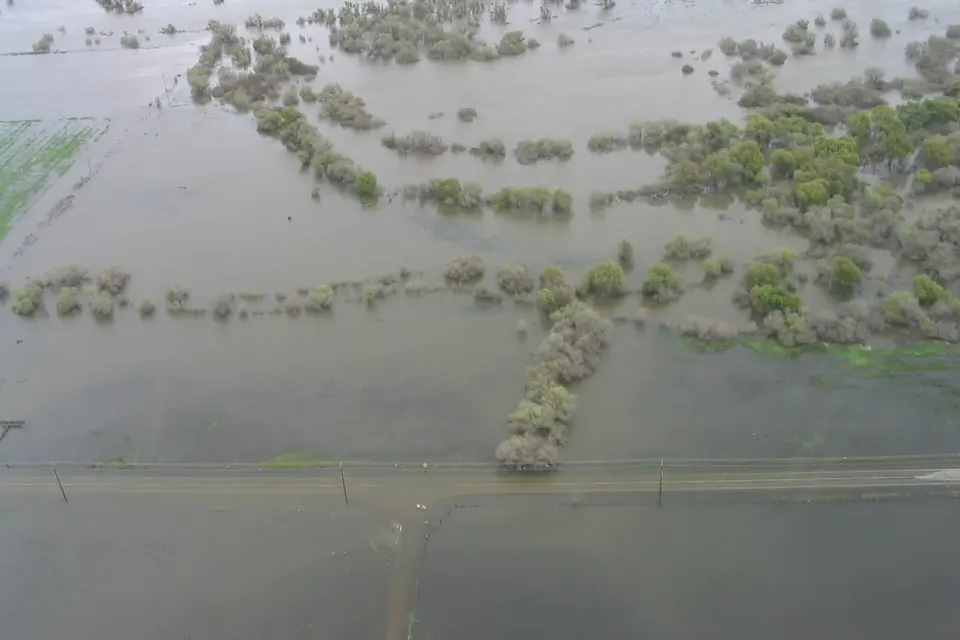
Emergencies on a dairy rarely come one at a time. A winter storm can raise pond levels, flood fields, cut power to the milk barn and close roads to the milk truck within the same night. The farms that cope best are those where everyone knows where the emergency sheet is, what is on it and who does what in the first hour. This guide sets out what such a plan usually contains.
The contact sheet
The core of any plan is a single page, printed and posted in the office and the milk barn and kept on every manager's phone. It lists, with numbers checked at least once a year:
- emergency services (911) and the dairy's exact address and gate directions, written so that a stranger could follow them;
- the Central Valley Regional Water Quality Control Board office handling the dairy, and the county environmental health department;
- the California Governor's Office of Emergency Services (Cal OES) State Warning Center, which takes hazardous materials and spill reports 24 hours a day;
- the herd veterinarian and a backup veterinarian;
- the milk processor's field representative and hauler dispatch;
- the electric utility's outage line, the generator service company and the fuel supplier;
- pumping, excavation and earthmoving contractors who can respond to a berm problem;
- a rendering or livestock disposal service;
- the county agricultural commissioner and the county office of emergency services;
- the names and numbers of the owner, managers and the person in charge on each shift.
Older dairy compliance binders included a sheet of exactly this kind as their final tab. The format matters less than the habit of keeping it current: a disconnected number found in the middle of a storm is worse than no list at all.
The site map
A clear map of the dairy, on one page, saves more time in an emergency than any other document. It should show buildings, ponds and their pumps, berms, wastewater pipelines and valves, fields and their outlets, ditches and drains leaving the property, domestic and agricultural wells, fuel and chemical storage, electrical shut-offs and the generator, and the routes to move cattle to higher ground. The same map is required in a different form for the dairy's waste management plan; a simplified copy for emergencies, with valves and shut-offs highlighted, is worth making separately.
Scenarios to think through
Pond overtopping or berm failure
The first goals are to stop the flow, contain what has escaped and protect surface water: close valves, stop pumping into the pond, start pumping out to fields or other storage where that can be done without causing runoff, and build temporary containment with earthmoving equipment. Noncompliance that endangers health or the environment must be reported within 24 hours to the regional board, the county and Cal OES, with a written report within two weeks; see our guide to discharge monitoring and priority reporting.
Flood
Valley floods give some warning. Watch river and weather forecasts, lower pond levels ahead of the wet season, move cattle and feed to higher ground early, and protect wellheads, which can let floodwater straight into the aquifer. After a flood, assume domestic wells are contaminated until tested; see drinking water from farm wells.
Power outage
Cows need to be milked and milk needs to be cooled. A generator sized for the milking system, the bulk tank cooling, water pumps and essential lighting, tested under load at regular intervals, is the usual answer. Plan for the fuel to run it for several days and for how milk will be handled if the truck cannot reach the dairy.
Fire and heat waves
Wildfire smoke and extreme heat stress cattle and people at the same time. Plans should cover water supply for animals and firefighting, evacuation of people, and the cooling measures described in our article on heat stress in dairy cows.
Disease or contamination
An animal disease emergency or a suspected contamination of milk or feed calls first for the herd veterinarian, then for state and federal animal health officials as directed. Biosecurity routines — controlling visitors, vehicles and new animals — reduce the chance of needing this part of the plan.
Roles and practice
Write down who does what: who calls whom, who closes the valves, who moves cattle, who keeps a log of times and actions. Make sure at least two people on every shift know how to start the generator and where the shut-offs are. Walk through the plan with the crew once a year, ideally before the wet season, in the languages they speak. The log kept during an incident becomes the basis for any report that follows.
After the event
Once the immediate danger has passed, a short review with everyone involved is the best way to improve the plan: what worked, what was missing, which numbers were wrong, which valve was hard to reach. Update the contact sheet and the map, replace used supplies, and file the incident log, photographs and any sampling results with the dairy's records. Where a written report was required, keep a copy of it with the regional board's response. Insurance claims and any assistance programmes will also ask for dates, photographs and quantities, so recording them during the event saves time later.
This page is general guidance, not a substitute for the emergency provisions of a dairy's own permit or for instructions from emergency services. In a life-threatening situation, call 911 first.
Sources
- Central Valley Regional Water Quality Control Board, Order R5-2013-0122, Monitoring and Reporting Program, "Priority Reporting of Significant Events".
- California Governor's Office of Emergency Services, Cal OES.
- US Environmental Protection Agency, Private drinking water wells, including guidance after flooding.
 Safety & emergencies
Drinking water from farm wells
Nitrate has no taste or smell. What to test, how to sample a domestic well and what to do with a high result.
 Water & nutrients
Production area visual inspections
Weekly in the wet season, monthly in the dry: what to look at around ponds, corrals and fields, and how to record it.