H5N1 on California dairies in numbers: 766 infected herds, about three in four of the state's dairies, August 2024 to February 2026
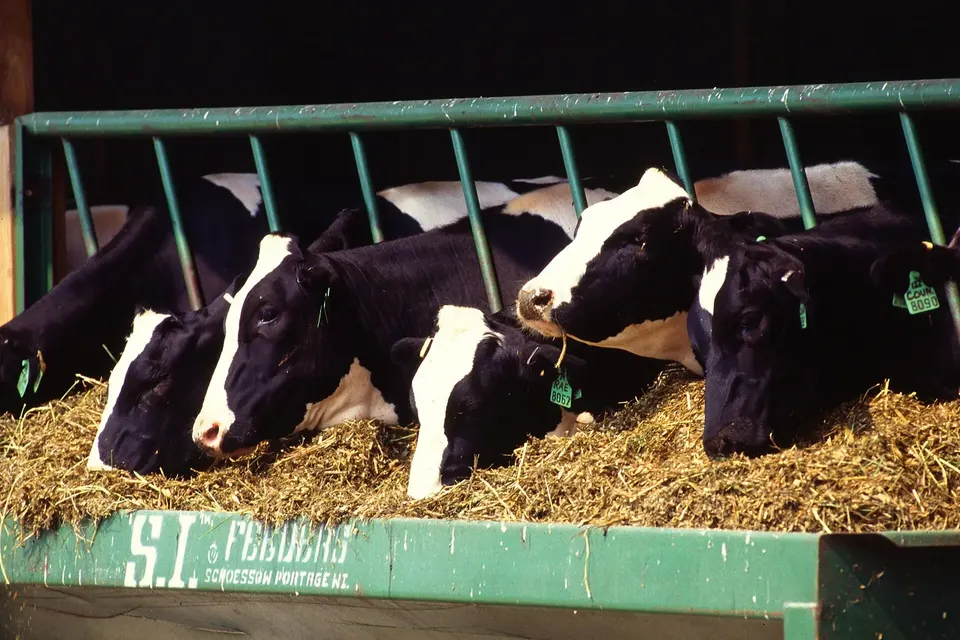
Between August 2024 and spring 2025, highly pathogenic avian influenza H5N1 moved through California's dairy herds faster and further than in any other state. The California Department of Food and Agriculture (CDFA) published a running count almost every working day. We compiled those updates into a single series to answer simple questions: how many dairies were infected, how fast, how many recovered, and where the outbreak stands at the end of 2026.
Key figures. 3 infected dairies on 30 August 2024; 202 by 31 October; 504 by 5 December; 766 in total by 21 May 2025, when 630 had been released from quarantine. The fastest month was November 2024, with 259 newly confirmed herds. CDFA released the last quarantined dairy on 27 February 2026, but California is still classed as an "affected" state under the national milk testing strategy.
The curve
The first three herds, all in the Central Valley, were confirmed on 30 August 2024, after cows began showing signs consistent with the disease on 23 to 25 August. STAT News had reported the investigation the day before, noting that California is the country's largest milk producer, in its 29 August 2024 story. From then on the count followed the classic shape of an epidemic: a slow start in September, a steep climb through October and November, and a long plateau from February 2025 as there were few herds left to infect.
Month by month
| Month | Last update | Cumulative infected | New in the month | Released from quarantine |
|---|---|---|---|---|
| August 2024 | 30 Aug | 3 | 3 | – |
| September 2024 | 30 Sep | 43 | 40 | – |
| October 2024 | 31 Oct | 202 | 159 | – |
| November 2024 | 27 Nov | 461 | 259 | – |
| December 2024 | 19 Dec | 650 | 189 | 56 |
| January 2025 | 31 Jan | 734 | 84 | 209 |
| February 2025 | 27 Feb | 748 | 14 | 329 |
| March 2025 | 27 Mar | 757 | 9 | 492 |
| April 2025 | 24 Apr | 765 | 8 | 613 |
| May 2025 | 21 May | 766 | 1 | 630 |
"New in the month" is the difference between two month-end totals. Because laboratory confirmations sometimes arrived in batches, single days can be misleading: on 13 December 2024 the total jumped from 559 to 630 in one update. Monthly differences smooth that out.
How large a share of the state's dairies?
CDFA's updates do not give a denominator, so the share has to come from elsewhere. The California Farm Bureau's Ag Alert reported that, as of 16 December 2024, 984 dairies were under bird-flu surveillance according to CDFA, 822 of them inland, 110 on the coast and 52 in the south. Taking that figure as an approximation of the state's commercial dairies, 766 infected herds is about 78 percent. UC Davis agricultural economists reached a similar order of magnitude: in the ARE Update article by Olena Sambucci, Daniel Sumner and Erica Van Fleet, 734 herds infected by the end of January 2025 represented "about 75% of all herds", concentrated in the San Joaquin Valley herds that produce about 90 percent of the state's milk.
What it cost in milk
For cows, H5N1 was rarely fatal but costly. The same UC Davis analysis estimates that California milk production was 6.4 percent below its expected level in October 2024, 10.3 percent in November and 8.4 percent in December, while the other five large dairy states produced more than projected. In infected herds, production fell by up to 20 percent for a week or two before slowly recovering, and about 40 percent of cows showed few if any symptoms. The national market absorbed the shock: "H5N1 has had little or no impact on milk prices because the disease has not substantially affected national milk production," Daniel Sumner told UC Agriculture and Natural Resources.
Emergency, recovery and re-infection
On 12 December 2024, four dairies in Southern California tested positive, the first outside the Central Valley. Six days later Governor Gavin Newsom proclaimed a state of emergency, calling it, as reported by CBS Sacramento, "a targeted action to ensure government agencies have the resources and flexibility they need to respond quickly to this outbreak." By then the released count was rising: herds are freed after three consecutive negative weekly bulk-tank milk tests, and the first-infected herds were clear within about three months.
The plateau did not mean the end. At a joint state Senate hearing in March 2025, state veterinarian Annette Jones recalled that "It was a surprise that the virus could get into cows," as the Santa Barbara Independent reported. On 1 August 2025 CDFA announced 43 previously released dairies placed back under quarantine after new detections. Quarantined herds fell to 13 on 29 October 2025 (six of them re-quarantines), 4 on 31 December 2025 and 2 on 21 February 2026, and on 27 February 2026 CDFA released every remaining dairy. Its March 2026 update for producers still warns that "intermittent low-level detections continue, indicating the virus is still present." In April 2026 California remained at Stage 3 of the National Milk Testing Strategy, so pre-movement testing of lactating cattle leaving the state is still required.
What the numbers mean on the farm
- CDFA asks producers to report at once a drop in milk production, lethargy, reduced feed intake, nasal discharge, fever or dehydration, abnormal feces or more abortions to its Animal Health Branch district office. Herd records of the kind described in our welfare self-assessment guide make such changes easier to spot.
- Cattle movements spread the virus between herds; CDFA's early investigations tied new cases to recent connections between dairies. Keep visitor logs and limit animal and vehicle movement, as in a dairy emergency plan.
- Raw milk from infected cows can carry high levels of virus: pasteurise, and keep workers protected in the parlour.
Method, sources and reuse
We read every dated H5N1 update on CDFA's H5N1 Bird Flu Virus in Livestock page (consulted 21 November 2026), from 30 August 2024 to 30 April 2026, and recorded the cumulative number of infected dairies and, from 6 December 2024, the number released from quarantine. Before 22 November 2024 CDFA gave a single cumulative total of "confirmed" dairies; we treat it as the cumulative infected count. The total for 11 September 2024 (6) is derived from the 3 new herds announced that day; all other figures are as published. CDFA stopped publishing a cumulative total after 21 May 2025, so later re-quarantines are not added to the 766. Counts are dairies (premises), not animals; CDFA does not publish the number of infected cows.
Download: california-dairy-h5n1-cdfa-2024-2025.csv (77 dated updates; columns: date, cumulative infected dairies, cumulative released, note, source). The figures are public information from the State of California; our compilation, table and chart are free to reuse with a link to this page. Last updated 21 November 2026.
Sources
- California Department of Food and Agriculture, Animal Health Branch, H5N1 updates for livestock (August 2024 to April 2026) and update for California dairy producers (March 2026).
- O. Sambucci, D. A. Sumner and E. A. Van Fleet, "Avian Influenza and the Economics of California Eggs and Milk: Some Early Assessments", ARE Update 28(3), Giannini Foundation, January/February 2025; summary by UC Agriculture and Natural Resources.
- Proclamation of a state of emergency, Governor of California, 18 December 2024; CBS Sacramento, 18 December 2024; Ag Alert, 1 January 2025; Santa Barbara Independent, 8 March 2025; STAT News, 29 August 2024.
 Animal care
Dairy welfare self-assessment
Management, health, housing, feed and water, handling and calves: a walk-through of an on-farm welfare check.
 Safety & emergencies
Dairy emergency planning
A contact sheet, a map with valves and ponds, and a plan for the first hour of a flood, spill or outage.
 Animal care
Heat stress in dairy cows
Why a milking cow overheats at temperatures a person finds pleasant, and how dairies cool her.