Evaluating dairy welfare on the farm: what a self-assessment covers
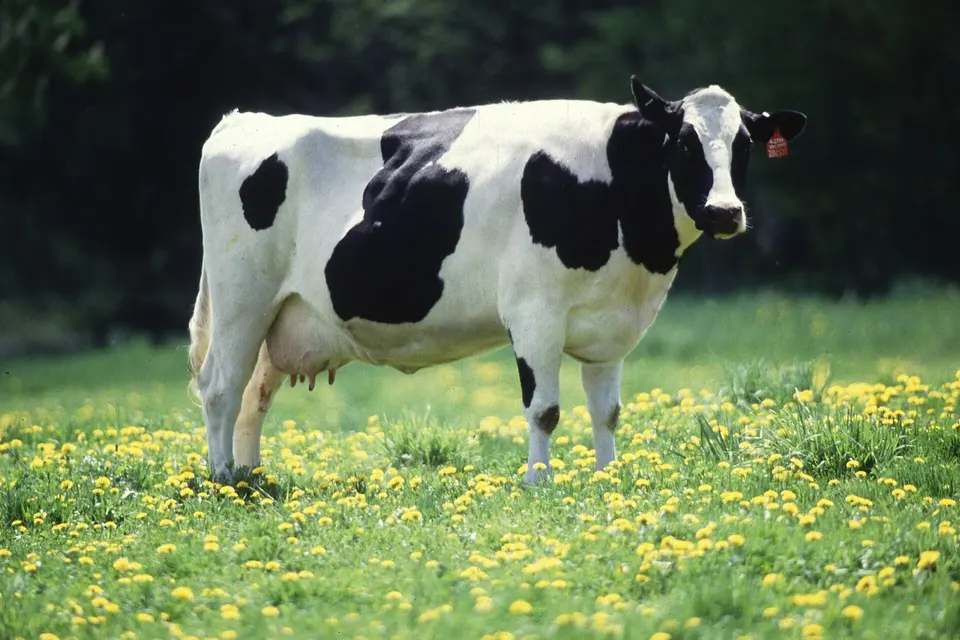
A dairy welfare evaluation is a structured walk around the farm with a checklist and a notebook. It asks whether the cows' basic needs — feed, water, comfort, health, freedom from pain and fear — are met, and whether the farm's routines would keep meeting them on a bad day. In California, university extension specialists produced one of the first such guides for dairies in the early 2000s; today most milk buyers ask farms to take part in the national FARM Animal Care programme. The questions are much the same.
Why self-assess
Welfare problems on a dairy tend to grow slowly: a few more lame cows each month, a water trough that empties faster than it refills in July, a new employee who was never shown how to move a downed cow. A periodic self-assessment is a way to notice those drifts before they show up in the bulk tank, the cull list or a buyer's audit. It also produces a written record that can be shown to a veterinarian, a processor or an auditor.
Good evaluation tools combine two kinds of evidence. Resource-based measures look at what the farm provides: stall dimensions, shade, water space, written protocols. Animal-based measures look at the cows themselves: how they walk, how clean they are, their body condition, injuries to hocks and knees. Animal-based measures are harder to fake and closer to what welfare actually means for the cow, so modern programmes give them more weight.
The six areas
1. Management and records
Is there a written herd health plan, developed with the herd veterinarian and reviewed at least once a year? Are there standard operating procedures for the tasks that most affect welfare — calving, care of newborn calves, euthanasia, handling of non-ambulatory animals, pain management for procedures such as disbudding — and have the people who do those tasks been trained on them, in a language they understand? Training records and a veterinarian-client-patient relationship are the backbone of this section.
2. Health care
The evaluator looks at how sick and injured animals are found and treated: who checks pens and how often, where sick cows are housed, how treatments are recorded, and whether withdrawal times for drugs are tracked so that residues never reach the milk tank. Lameness and mastitis are the two conditions that most often signal a system problem; locomotion scoring gives a simple, repeatable way to measure the first.
3. Facilities and environment
Cows spend ten to fourteen hours a day lying down when they can. Stalls or bedded packs should let them lie, rise and stand without striking fixtures; alleys should give footing that is neither slippery nor abrasive; air should move, especially in summer. Hygiene scoring of legs and udders shows whether bedding and alleys are kept clean. In California's Central Valley, shade and active cooling belong here too; see heat stress in dairy cows.
4. Feed and water
Every cow should be able to reach feed and clean water without excessive competition. Evaluators check bunk space per cow, how often feed is pushed up, the number and flow of water troughs, and how clean the troughs are. Body condition scoring shows whether the ration and the grouping of cows are working: too many thin cows in early lactation or too many fat cows at dry-off point to a feeding or management problem.
5. Handling and transport
Calm, low-stress handling makes cows safer to work with and less likely to be injured. The evaluation looks for electric prods used only as a last resort, if at all; for loading facilities and alleys without sharp turns or dead ends; and for a clear rule that animals unfit for transport — unable to walk, in late pregnancy, or showing signs of disease — stay on the farm until treated or humanely euthanised. Federal rules have prohibited the slaughter of non-ambulatory adult cattle for human food since 2009, which makes on-farm decisions about these animals all the more important.
6. Calves and youngstock
Calf care starts at birth: a clean calving area, timely and sufficient colostrum, navel care, and housing that keeps calves dry and out of drafts and heat. Evaluators look at mortality and treatment records for calves and heifers, the method and timing of disbudding with pain relief, and weaning practices.
From observations to an action plan
An evaluation is only useful if it ends with decisions. A simple approach is to list every item scored below the target, rank them by how many animals they affect and how severe the effect is, and agree with the herd veterinarian on three or four actions with a date and a person responsible. Repeating the same measurements in three to six months shows whether the change worked. Animal-based scores are particularly good for this: if the share of cows scoring lame drops after a footbath routine or a stall change, the improvement is real.
How this relates to FARM and buyer audits
The National Dairy FARM Program, run by the National Milk Producers Federation, is the most widely used welfare standard on US dairies. Its Animal Care component combines a written-protocol review with animal observations by trained evaluators, and its standards are revised on a roughly three-year cycle: Version 5 has applied since 1 July 2024, and a "Version 2028", put out for comment from July to September 2026, is scheduled to start in January 2028. A farm that has done its own assessment along the lines above will find most FARM questions familiar. Retailers and processors may add their own requirements on top.
A self-assessment is a management tool, not a certification. Only the programme concerned can certify participation, and only a veterinarian can diagnose and prescribe for a herd.
Sources
- National Dairy FARM Program, FARM Animal Care Version 5 and Version 2028 development (accessed November 2026).
- University of California Agriculture and Natural Resources, UC Cooperative Extension dairy and animal welfare resources.
- USDA Food Safety and Inspection Service, final rule requiring humane euthanasia of non-ambulatory disabled cattle, 74 Fed. Reg. 11463, 18 March 2009.