Heat stress in dairy cows: signs, thresholds and cooling in a California summer
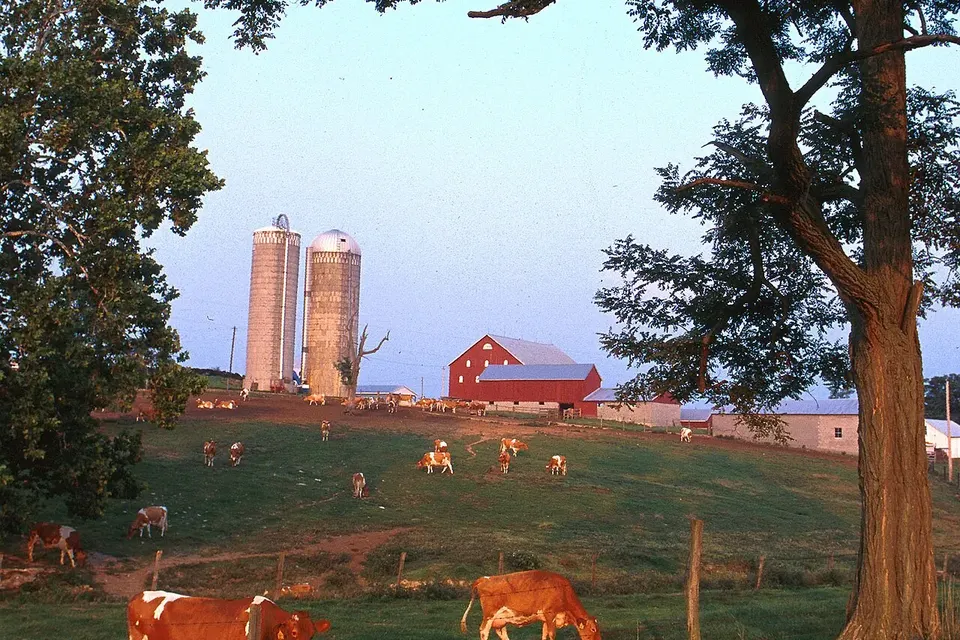
A high-producing dairy cow is a furnace. Digesting a large ration and making milk generates so much heat that she starts to struggle to shed it at air temperatures most people would call mild. In the Central Valley, where summer afternoons regularly pass 100°F (38°C), heat stress is the welfare and production problem that dairies plan for every year.
Why cows overheat early
Cattle lose heat mainly through their skin and by panting. Cows sweat far less than humans do, and a large body has relatively little surface area for its mass. As milk yield has risen over the decades, so has the heat a cow produces, which is why today's lactating cows are more sensitive than the cows of fifty years ago. Heat that cannot be dissipated during the day can still be lost at night if temperatures drop; the dangerous periods are heat waves with warm nights, when cows never fully recover.
Measuring the risk: the temperature-humidity index
Because humidity reduces the cooling effect of evaporation, heat stress is usually measured with a temperature-humidity index (THI) that combines air temperature and relative humidity. Research published from the late 2000s onwards lowered the threshold at which high-producing cows are considered to be under heat stress to a THI of about 68 — reached, for example, at around 72°F (22°C) with moderate humidity. Extension services in several states now advise starting active cooling at a THI between 65 and 68. A cheap combined temperature and humidity sensor in the barn or holding pen, read against a THI chart, is enough to know when that point is passed.
The Central Valley's dry summer air works in a dairy's favour: low humidity makes evaporative cooling very effective. It also means that the same afternoon temperature is less stressful than in a humid climate — but the sheer heat of a valley afternoon more than makes up for that.
Signs to watch
- Faster breathing. A resting respiration rate above about 60 breaths a minute is a common early sign; open-mouth panting with the tongue out is a late one.
- Cows bunching around water troughs, fans or shade, and standing rather than lying.
- Lower feed intake, especially during the day, and a drop in milk yield a day or two after hot weather.
- Fewer cows showing heat, lower conception rates and more pregnancy losses in summer and early autumn.
- In heat waves, cows that are down or staggering — an emergency for the veterinarian.
The cooling toolkit
Shade
Shade is the first and cheapest measure. It cuts the solar heat load considerably and is needed wherever cows spend time outdoors: corrals, drylots, pasture and the feed lane. Shade structures in hot climates are usually built high and oriented so that the shaded area falls where cows stand during the hottest hours, with enough space per cow that they do not crowd.
Soakers and fans together
Evaporation is the most powerful way to cool a cow. The common California approach is to wet the cow's back and shoulders with large-droplet soakers — not a fine mist that only wets the hair coat and raises humidity — and then move air over her with fans to evaporate the water. University of California extension notes that many California dairies place soakers over the feed bunk and fans over the freestalls; research at UC Davis has found that cows begin to seek out soakers once THI climbs into the high 60s.
The holding pen
Cows waiting to be milked stand tightly packed, often for long periods. The holding pen is therefore one of the hottest places on the dairy and one of the most effective places to cool. Fans and soakers there, with short waiting times, pay back quickly in milk and comfort.
Water and feed
A lactating cow can drink well over 30 gallons a day in hot weather. Troughs should be large, clean, shaded and fast-refilling, with space for several cows at once, including at the parlour exit. Feeding more of the ration in the cooler hours, pushing up feed more often and working with the nutritionist on the ration's energy density and minerals help cows keep eating.
Dry cows and calves
Dry cows are easily forgotten because they are not in the tank, but heat stress in late pregnancy affects the calf and the next lactation; cooling them is now standard advice. Calves in hutches need shade, ventilation and constant access to water.
Checking that cooling works
The simplest test of a cooling system is to watch the cows. Count breaths per minute on a dozen resting cows in each pen in mid-afternoon; if most are well above 60, the system is not keeping up. Note where cows stand: crowding under one fan or at one end of a shade structure shows where cooling is missing. Some dairies take vaginal or rectal temperatures on a sample of cows, or use data from activity and rumination collars, which tend to show a fall in rumination time during hot spells. Setting these observations against the barn's THI readings over a few hot weeks shows when the system should start and whether it needs more capacity.
Water, energy and the next decade
Cooling uses water and electricity, both under pressure in California. UC Davis researchers have tested alternatives designed to reduce the water and power used by conventional soaker-and-fan systems, such as targeted cooling of the cow's bed or air. Whatever the system, controlling it by THI rather than by the calendar or a fixed temperature avoids running it when cows do not need it.
Heat-stressed cows can deteriorate quickly. If cows are down, staggering or panting with open mouths despite cooling, call the herd veterinarian.
Sources
- UC Davis College of Agricultural and Environmental Sciences, Infographic: cow cooling approaches.
- UC Cooperative Extension, UCCE Dairy Programs.
- The Ohio State University, Buckeye Dairy News, Cool tips for managing heat stress in dairy cows.
- British Columbia Ministry of Agriculture, Strategies to reduce heat stress in dairy cows (THI 68 threshold).
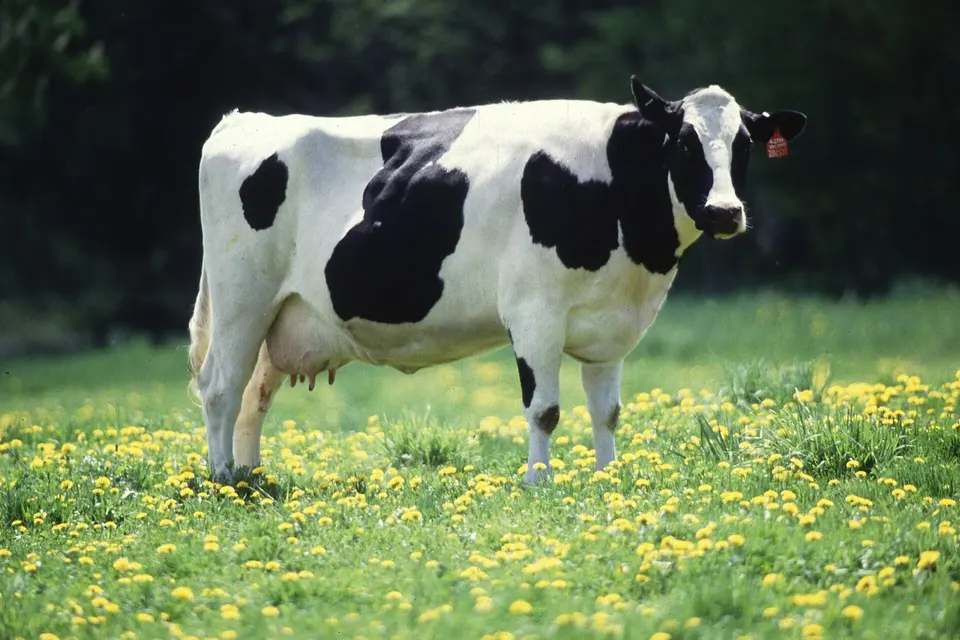 Animal care
Dairy welfare self-assessment
Management, health, housing, feed and water, handling and calves: a walk-through of an on-farm welfare check.
 Water & nutrients
The dairy General Order, 2007–2026
The 2007 order, the 2013 reissue and the State Water Board's 2026 nitrogen framework, in plain terms.